Posted on Leave a comment

Glock Switch vs. Glock 18: The Real Story

Glock Switch 10 Pack - Glock Auto Switches | Glock Auto Switches

Glock Switch vs. Glock 18: The Real Story

You’re looking at a Glock 19 with a switch and a factory Glock 18, both on full-auto. To the untrained eye, the result is the same: a spent magazine in under two seconds. But the path to that result, the mechanics involved, and the legal reality are worlds apart. Understanding the difference isn’t academic; it’s essential for anyone serious about this niche.

Mechanical Origins: Aftermarket Part vs. Factory Firearm

The core distinction is foundational. A Glock switch, like the common “Giggle Switch” or “Auto Sear,” is an aftermarket conversion device. It’s a small, typically metal component that modifies a standard semi-automatic Glock pistol (like a Glock 17, 19, or 26) to fire in a fully automatic mode. It interacts with the pistol’s trigger mechanism and slide to hold the firing pin back, allowing it to cycle with each shot. The Glock 18, however, is a complete, purpose-built machine pistol designed and manufactured by Glock GmbH. Its full-auto capability is integral, originating from a factory-installed selector lever on the slide and a modified internal fire control group. One is an add-on, the other is the original blueprint.

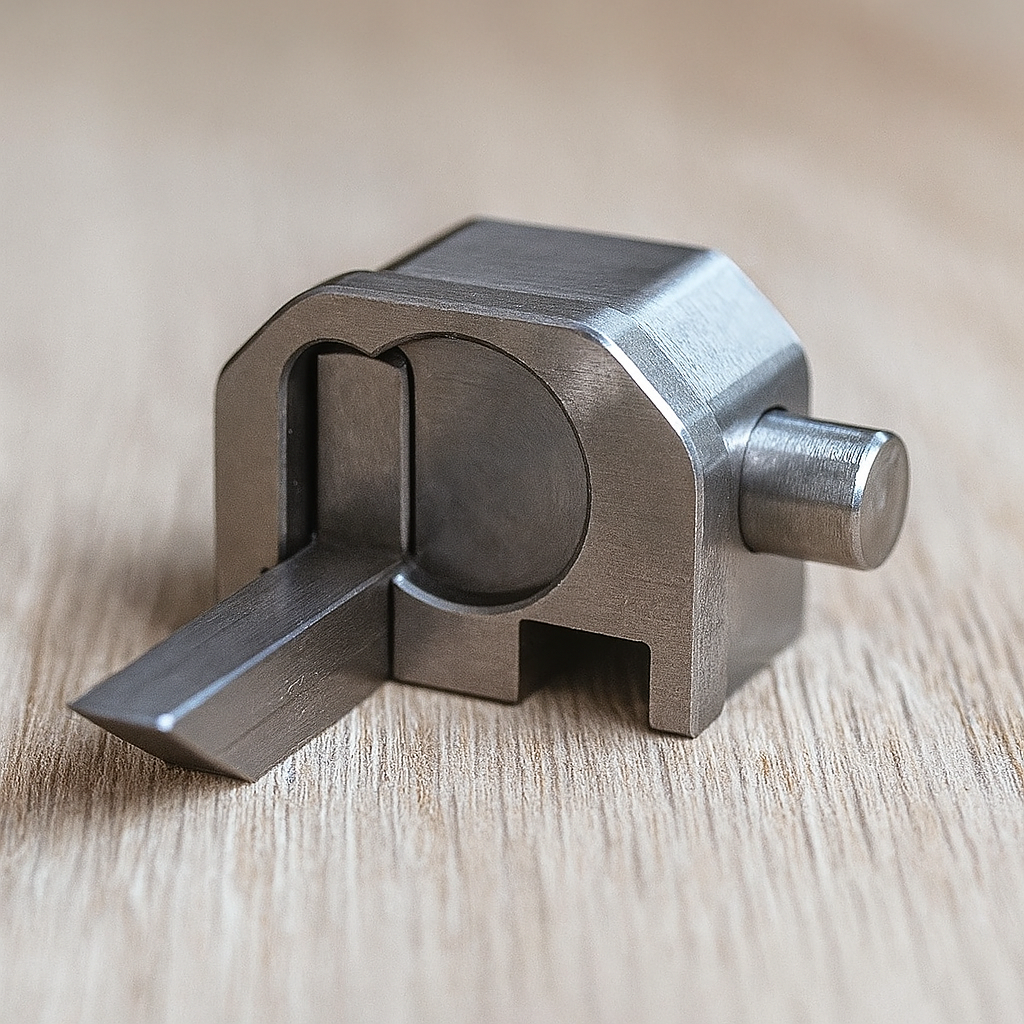
Glock auto sear switch component isolated on a work mat

See compatible switches for Gen 3-5 models

Performance & Practicality in Use

On the range, the differences become tangible. A switched Glock, especially on a compact frame like a G19, becomes notoriously difficult to control after the first few rounds. Muzzle climb is severe, and practical accuracy beyond point-blank range is negligible. It’s a fun, but largely impractical, exercise. The factory Glock 18 was designed with controllability in mind. It features a slightly longer, ported barrel and is almost always used with an extended 33-round magazine or a proprietary high-capacity magazine. While still a handful, its weight distribution and design make it marginally more manageable. Neither are precision instruments; they are bullet hoses. But the G18 is the more refined hose.

The Legal Chasm: NFA Regulations

This is the non-negotiable dividing line. In the United States, the Glock 18 is classified as a Title II machine gun under the National Firearms Act (NFA). Transferable, pre-1986 dealer samples exist but are exceedingly rare and command prices of $25,000 or more. They are not available to the general public. A Glock switch, by itself, is classified as a “machinegun” under federal law (ATF ruling 2018-3). Possessing one, or a Glock modified with one, without the proper NFA paperwork is a felony punishable by up to 10 years in prison. This isn’t a gray area. At Glockautoswitches, we stress that our products are for educational display and compliant use only, within the full bounds of federal and state law.

Technical cutaway diagram of a Glock 18C machine pistol

View display and technical models

Availability and Acquisition Reality

For the civilian enthusiast, the Glock 18 is essentially a museum piece or a law enforcement/military curio. You will not walk into a store and buy one. Your only legal path is through the tightly regulated NFA process for a transferable machine gun, requiring extensive background checks, a $200 tax stamp, and a five-figure investment. The aftermarket switch exists in a different realm. While the functional components are federally restricted, non-functional display models, diagrams, and technical replicas are available for collectors and those interested in the mechanical engineering. These are the items you’ll find at reputable sources like Glockautoswitches, designed for analysis, not assembly.

Final Verdict: Collector’s Curiosity vs. Mechanical Modification

Choosing between them isn’t a choice at all—it’s a matter of context. The Glock 18 is the rare, legally-restricted original. The Glock switch represents the widespread mechanical principle that enables the conversion of a ubiquitous platform. For 99.9% of people, the “Glock 18 experience” will only ever be through handling a switched semi-auto, which underscores the importance of understanding the device itself. If your interest is in the history and official design, study the G18. If your interest is in the mechanical function that enables selective fire on a Glock pattern pistol, then studying the design and operation of a switch is the relevant path.

FAQ

What is a switch for a Glock?

A Glock switch is an aftermarket conversion device, often called an auto sear or “Giggle Switch.” When installed in a semi-automatic Glock pistol, it modifies the fire control group to allow for fully automatic fire. By itself, it is federally regulated as a machinegun under the NFA.

Is a Glock 18 legal to own?

For private citizens in the US, it is virtually impossible. The Glock 18 is a machine gun, and only transferable units registered before May 19, 1986, can be legally owned under the NFA. These are extremely rare and cost tens of thousands of dollars, requiring an extensive federal application process.

Can you buy a Glock switch legally?

You cannot legally purchase a functional Glock switch without the proper Federal Firearms License (FFL) and NFA manufacturer or dealer credentials. However, non-functional display models, diagrams, and inert training aids are legally available for educational and collector purposes from specialized retailers.

Which Glock models can a switch work on?

Common aftermarket switch designs are typically engineered for the Gen 3, Gen 4, and Gen 5 models of the full-size and compact frames, like the Glock 17, 19, 22, and 23. The mechanism relies on the specific geometry of the Glock trigger housing and slide. Always verify compatibility for your specific model.

Browse our glock switches collection

Last updated: April 08, 2026
Posted on Leave a comment

How to Switch a Glock Mag Release

Buying a Purple Glock Selector Switch Guide - Glock Auto Switches | Glock Auto Switches

How to Switch a Glock Mag Release

If your Glock 19’s magazine release is stiff or you’re a left-handed shooter tired of an awkward reach, swapping it is a 5-minute job that requires one tool. The factory polymer release is designed for right-hand operation, and upgrading to an extended or ambidextrous metal release is one of the most impactful ergonomic mods you can make. Here’s the exact process, from disassembly to function check.

Tools and Parts You’ll Need

You only need a 3/32″ punch or a Glock tool. For the new part, you have options. The factory Glock extended magazine release (Part #SP07433) is a common upgrade. Aftermarket options like the Vickers Tactical Extended Mag Release or the Hyve Technologies release offer more aggressive texture and color choices. If you’re switching sides for a left-hand configuration, you’ll need a dedicated left-hand release like the Glock factory part (#SP07033) or an ambidextrous model. Ensure compatibility; Gen5 models use a different, slimmer release than Gen1-4. Always have a fresh magazine for the final function test.

Step-by-Step Disassembly

First, ensure the pistol is completely unloaded. Remove the magazine and visually and physically confirm the chamber is empty. Lock the slide to the rear. Using your punch, push the slide lock lever’s pin from the right side of the frame towards the left. It only needs to move about 1-2mm—just enough to clear the frame. Do not remove it completely. Once it’s pushed out slightly, you can rotate the slide lock lever downward and out of the frame. This releases tension on the magazine release spring. Next, from the opposite side of the frame, push the magazine release button inward. The entire assembly—button, spring, and spring cap—will come free. Note the orientation: the curved end of the spring hooks into the frame, and the flat cap sits against the release.

Close-up of Glock frame with magazine release removed, showing spring orientation

Installing the New Release

This is where you decide on configuration. For a standard right-hand extended release, insert the new release’s button into the frame from the left side. Hook the spring’s curved end into the small notch inside the frame, then place the flat spring cap over the spring’s straight end. Compress the entire assembly and push it through the frame until the button protrudes from the right side. For a left-hand install, you simply reverse the process: insert the button from the *right* side of the frame so it protrudes on the left. The spring orientation remains the same—curved end hooked in the frame. The key is steady pressure to compress the spring. A common mistake is not fully seating the release, which can cause the slide lock lever to bind during reinstallation.

Reassembly and Function Check

With the new magazine release seated, reinstall the slide lock lever. Insert its pin into the left side of the frame and rotate the lever up into position. Align the hole in the lever with the hole in the frame, then use your punch to tap the pin back through from left to right until it’s flush. Perform a full function check. Insert an empty magazine—you should hear and feel a positive click. Press the release; the magazine should drop free without needing to be pulled. Rack the slide to ensure the slide lock lever engages properly when manually activated. Finally, with the pistol *unloaded*, perform a press-check to ensure the new release doesn’t interfere with slide operation. A proper install requires zero fitting and provides immediate, reliable function. For those looking to complement this mod, Glockautoswitches offers select components that integrate with a streamlined control setup.

Hyve Technologies Extended Mag Release for Glock Gen1-4

Why Upgrade Your Mag Release?

The factory polymer release works, but it’s small and requires a significant shift in grip to actuate quickly. An extended release, typically adding 2-3mm of surface area, allows you to drop a mag with minimal thumb movement, shaving crucial tenths of a second off reloads. For lefties, switching the release to the right side of the frame is a non-negotiable for efficient manipulation. Metal aftermarket releases also eliminate the wear and “mushiness” that can develop on polymer parts over thousands of cycles. It’s a durability upgrade. When paired with other control enhancements from a specialist like Glockautoswitches, you create a pistol tailored precisely to your hand and shooting style. This isn’t just a cosmetic change—it’s a direct performance enhancement.

FAQ

How to switch Glock mag release side?

To switch sides for left-hand operation, you need a left-hand specific magazine release. During installation, insert the release button from the *right* side of the frame so it protrudes on the left. The spring and cap install identically to a right-hand setup. The slide lock lever does not need to be modified.

How to switch Glock mag release?

Unload the pistol. Push out the slide lock lever pin 1-2mm, remove the lever, then push the old mag release inward from the opposite side to remove it. Install the new release by compressing the spring and cap, pushing the button through the frame. Reinstall the slide lock lever and pin. Always perform a function check.

How to reverse Glock mag release?

Reversing the release means converting it for opposite-hand use. This requires a dedicated left-hand or ambidextrous magazine release part. You cannot simply flip the standard release. The process is the same as a standard swap, but you insert the button from the opposite side of the frame during installation.

Browse our glock switches collection

Last updated: April 07, 2026

Posted on Leave a comment

Glock Switch vs. Binary Trigger

Winchester Super X 22LR Ammo 25 Grain Lead Shot - Best Price - Rifles | Glock Auto Switches

Glock Switch vs. Binary Trigger

You’re looking at your Glock and thinking about a faster rate of fire. The two main hardware options are a Glock auto-sear (a “switch”) or a binary trigger. One is a small, simple metal part that replaces your rear slide cover plate. The other is a complex, drop-in trigger assembly. The difference in function, legality, and performance is absolute.

How They Work: The Mechanical Reality

A Glock switch is a forced reset auto-sear. It’s a single, precision-machined component, typically made from hardened steel or aluminum. When installed in place of the rear slide cover plate, its sear arm intercepts the trigger bar’s rearward travel as the slide cycles. This forces the trigger to reset forward instantly, engaging the disconnector and firing the next round as long as you maintain rearward pressure. It’s a purely mechanical conversion that leverages the pistol’s existing blowback operation. In contrast, a binary trigger is a self-contained fire control group. It uses a specialized disconnector and trigger mechanism. Pulling the trigger fires a round on the pull, and releasing the trigger fires a second round. The reset is not forced by the slide; it’s a function of the trigger’s designed travel path. One modifies the factory system, the other replaces it entirely.

Rate of Fire: Practical vs. Theoretical

This is where the rubber meets the road. A properly installed switch on a Glock 17 or 19 can achieve rates exceeding 1,200 rounds per minute. It’s functionally full-auto. Control is difficult, and a standard 17-round magazine empties in under a second. A binary trigger’s rate is limited by your finger speed. The fastest you can pull and release determines your cyclic rate, which even for an expert might reach 400-500 rounds per minute in perfect conditions. It’s a simulated two-round burst per trigger cycle, not automatic fire. For sustained, high-volume fire, the switch is in a different league. For controlled, rapid pairs, the binary has its place. The binary’s rate is physically capped by human biomechanics; the switch’s rate is capped by the slide velocity and magazine spring tension.

Legality: The Critical Divide

This is the non-negotiable point. Under the National Firearms Act (NFA), a machine gun is defined as any weapon which shoots more than one shot, without manual reloading, by a single function of the trigger. A Glock switch meets this definition precisely. Manufacturing or possessing one without a pre-1986 dealer sample license or proper ATF registration is a federal felony. Period. Binary triggers, however, are generally considered legal at the federal level because each shot requires a distinct “function” of the trigger—a pull and a release. They are not classified as machine guns. However, several states explicitly ban them. You must know your local laws. At Glock Auto Switches, we provide information for educational and compliance purposes; always consult an attorney regarding NFA regulations.

Reliability and Installation Complexity

Installing a switch is straightforward if you have basic Glock disassembly knowledge. You remove the rear slide cover plate and replace it with the auto-sear unit. The challenge is in the precise fit and timing; a poorly machined sear can cause runaway full-auto or failures to reset. It puts immense stress on the factory trigger components. A binary trigger, like those from Franklin Armory for Gen 3 Glocks, is a complete drop-in trigger pack. You replace the entire trigger mechanism, which is more involved but designed as a cohesive system. Reliability often favors the binary in the long run, as it’s engineered for its specific fire mode. The switch modifies a system not originally designed for automatic fire, which can lead to accelerated wear on the slide, striker, and trigger bar.

Cost and Long-Term Value

The upfront cost difference is stark. A quality CNC-machined steel Glock switch might cost between $20 and $150 for the component itself. The real, legal cost involves the NFA tax stamp and registration, which is a separate, rigorous process. A binary trigger system for a Glock is a commercial product; you’re looking at $350 to $500 for the unit alone. There’s no tax stamp. Long-term, the binary trigger retains functionality and value as a legal accessory. The switch, unless legally registered, has no legal value and carries extreme liability. From a purely hardware perspective, the switch is the cheaper component, but the binary is the only practical, legal option for most civilian shooters seeking a faster trigger cycle without committing a federal crime.

Can you put a binary trigger on a Glock?

Yes, but only for specific generations. Companies like Franklin Armory manufacture binary trigger systems designed as drop-in replacements for Gen 3 Glock models. These are complete fire control groups that replace the factory trigger, bar, and disconnector. They are not compatible with all generations or models, so you must verify compatibility for your specific pistol, such as a Glock 17 Gen 3 or Glock 19 Gen 3.

Why are Glock switches illegal?

Glock switches are classified as machine gun conversion devices under the National Firearms Act. They modify a semi-automatic pistol to fire automatically—more than one round per single function of the trigger—which is the federal definition of a machine gun. Possession or manufacture of such a device without proper ATF registration and a tax stamp is a felony, as it creates an unregistered NFA firearm.

Why does Glock have 2 triggers?

It doesn’t. The Glock’s “two-trigger” system is a safety feature often misunderstood. The trigger blade itself is the second “trigger” or safety lever. The firearm will not fire unless the internal trigger safety lever (the small blade in the center of the trigger) is deliberately depressed along with the main trigger shoe. This prevents accidental discharge if the trigger is snagged on an object, as both components must be engaged simultaneously.

Browse our glock switches collection

Last updated: April 06, 2026

Posted on Leave a comment

Glock Switch Laws: The Legal Reality

04 Glock Switch: Gold color - Glock Auto Switches | Glock Auto Switches

Glock Switch Laws: The Legal Reality

Possessing a Glock switch, or auto sear, is a federal felony punishable by up to 10 years in prison and a $250,000 fine, regardless of your state’s firearm laws. The ATF classifies these devices as “machineguns” under the National Firearms Act (NFA) of 1934. This isn’t theoretical; arrests for possession or attempted purchase of these items are frequent and prosecuted aggressively.

The National Firearms Act & Machinegun Definition

The core of the issue is the legal definition. Under the NFA, 26 U.S.C. § 5845(b), a “machinegun” includes any part designed and intended solely for use in converting a weapon into a machinegun. A Glock switch—whether it’s a “Giggle Switch,” “Auto Key Card,” or “DIAS”—fits this definition perfectly. It doesn’t matter if it’s installed; mere possession of the part is illegal. The ATF’s ruling in 2021 further clarified that even 3D-printed files (CAD models) for these devices are considered “machineguns.” This is why platforms that host these files face legal pressure. The law is concerned with function, not form. A piece of plastic or metal that enables full-auto fire transforms your Glock 19 or Glock 17 into an NFA-regulated item, which was never legal for civilian manufacture after May 1986.

State Laws vs. Federal Law: No Exceptions

You might live in a state with permissive firearm laws, but federal law supersedes. There is no state that has legalized the civilian possession of newly manufactured machinegun conversion devices. Some states have additional, stricter penalties. For example, in California, possession could also be prosecuted under state law as a felony with potential for prison time. The misconception that a state’s “constitutional carry” law or lack of firearm registration creates a loophole is dangerous and legally incorrect. Federal agents from the ATF and FBI investigate and prosecute these cases. Your local sheriff’s opinion on the Second Amendment does not override the U.S. Code. The only legal path to owning a fully automatic Glock is to purchase a pre-1986 registered transferable Glock 18, a process involving extensive ATF paperwork, a $200 tax stamp, and a price tag often exceeding $30,000.

Diagram showing legal vs illegal Glock configurations

Understanding the legal distinction is critical. The device itself is the regulated item.

Common Misconceptions & Enforcement Actions

Several persistent myths lead people into serious trouble. First, the “80% switch” or “for display only” claim offers zero legal protection. The ATF evaluates the design and intent of the object. Second, purchasing a switch from an overseas website or a “grey market” Telegram channel does not shield you; customs (HSI) and postal inspectors intercept these packages regularly. Third, simply owning a 3D printer and downloading files can be construed as constructive possession. Enforcement is proactive. The ATF runs undercover online operations, monitors dark web marketplaces, and coordinates with social media platforms to track the sale and distribution of these devices. Prosecutions are not limited to criminals using them in violent acts; they routinely target individuals for mere possession.

For compliant accessories and parts, browse our full catalog at GlockAutoSwitches.

Potential Defenses & Legal Precedence

There are virtually no successful legal defenses for simple possession of a modern conversion device. Arguments based on the Second Amendment have consistently failed in court regarding machineguns, as established in cases like *United States v. One Assortment of 89 Firearms*. The 1986 Firearm Owners’ Protection Act (FOPA) is often mis-cited; it banned new machinegun registration but did not legalize conversion devices. The only potential, though highly unlikely, defense could involve proving the item in question is genuinely incapable of converting a semiautomatic firearm—a nearly impossible bar to meet given ATF testing protocols. If you are under investigation, your only course of action is to secure a qualified federal criminal defense attorney immediately. Do not speak to agents without counsel present.

Is it legal to own a Glock switch if I don’t install it?

No. Federal law prohibits possession of the device itself, regardless of intent to install. The ATF considers it a machinegun. Storing it in a drawer is the same as having it in the firearm in the eyes of the law.

Can I get a tax stamp for a Glock switch?

No. The Hughes Amendment to the FOPA in 1986 closed the registry for new transferable machineguns. Since a switch creates a new machinegun, it cannot be registered or made legal with a tax stamp. Only pre-1986 registered dealer samples or transferables (like a Glock 18) are eligible.

What happens if a package with a switch is intercepted?

If intercepted by Customs (HSI) or the Postal Inspection Service, it will likely lead to a “controlled delivery.” Law enforcement will deliver the package to document you taking possession, followed by your arrest. You will face federal charges for importation and possession of a machinegun.

Browse our glock switches collection

Last updated: April 05, 2026

Posted on Leave a comment

How to Get a Glock Switch

Get Hornady Superformance Varmint 204 Ruger Ammo 40 Grain Hornady V-Max Polymer Tip 500rounds Online - Ammunition | Glock Auto Switches

How to Get a Glock Switch

You’re looking for a Glock auto sear, but the search results are flooded with scams, airsoft junk, and 3D-printed files that fail after 50 rounds. The real deal is a machined, heat-treated component that interfaces directly with your slide and trigger mechanism. Knowing where to source a reliable unit is the difference between a functional conversion and a paperweight.

Understanding What You’re Actually Buying

A “Glock switch” or auto sear is a small, precisely machined metal component, typically for models like the Glock 17, 18, or 19. It replaces the factory rear plate and modifies the firearm’s fire control group to enable selective fire. The critical factors are material (4140 or 17-4PH stainless steel is standard), hardening (RC 40+), and dimensional tolerance. A poorly made sear will cause hammer follow, out-of-battery detonation, or simply not function. At GlockAutoSwitches, every unit is CNC-machined to OEM specifications and proof-tested, which is why we don’t sell polymer or MIM parts.

Navigating Online Marketplaces vs. Dedicated Retailers

Platforms like eBay or AliExpress are minefields. Sellers use coded language like “Glock toy” or “selector switch” to list products that are often cast zinc or soft steel. They might fit, but they won’t last. A dedicated retailer like GlockAutoSwitches operates transparently. You’ll get the exact specs—like a .154″ selector pin diameter for Gen 3 models or the correct sear height for a Glock 26. The price reflects the engineering. Expect to pay $350-$600 for a quality machined unit, not $45 for a pot-metal disaster.

The Legal Pathway: From Form 1 to Manufacturer

For individuals, the only legal method to acquire and install a switch is to register your Glock as a machine gun with the ATF via a Form 1 (tax stamp) and manufacture the sear yourself, provided you are not a prohibited person. This requires meticulous documentation. The alternative is purchasing a pre-1986 transferable Glock 18, which costs $30,000+. Companies like GlockAutoSwitches supply components to SOT manufacturers (07/02 FFLs) who build post-sample machine guns for law enforcement and government agencies. We do not and cannot sell directly to private individuals for installation on personal firearms without the proper, pre-approved ATF paperwork.

Installation: Gunsmithing vs. DIY Risks

Installing a switch isn’t plug-and-play. It requires partially disassembling the slide, removing the factory rear cover plate, and installing the new assembly with its selector lever. The cruciform on your trigger bar may need slight fitting. An incorrectly installed sear can lead to uncontrolled full-auto fire or a dead trigger. Most reputable gunsmiths with an SOT will only perform this work on a registered post-sample or transferable firearm. Attempting a DIY install on an unregistered pistol is a federal felony with a 10-year mandatory minimum sentence. The component itself is not illegal; its unregistered installation is.

Verifying Authenticity and Build Quality

When you evaluate a source, demand clear, macro photographs of the actual product. Look for machining marks, proper heat treat colors (a straw or blue hue), and sharp, clean edges. Ask for the material certification. A real auto sear will have a precise fit with the slide and selector detent. Many inferior products are clones of clones, with out-of-spec pin holes or incorrect sear geometry. Our inventory at GlockAutoSwitches is directly sourced from licensed manufacturers, and we provide full material specs because our customers—FFL/SOTs—require that documentation for their own compliance.

How to get glock switches

Genuine Glock switches are acquired through licensed manufacturers and distributors who supply Federal Firearms Licensees (FFLs), specifically those with a Special Occupational Tax (SOT) status for dealing in National Firearms Act items. For private individuals, the only legal avenue is to file an ATF Form 1 to manufacture one on a registered firearm, then source the component from a supplier that sells to form-1 applicants. Always verify the seller’s credentials and product specifications.

How to get glock switch in south bronx

The legal process is identical regardless of location. There are no special dispensations. You must comply with federal NFA regulations and New York state law, which effectively prohibits private ownership. Your only potential point of contact would be a licensed manufacturer or dealer (07/02 FFL/SOT) operating legally within the state, typically servicing law enforcement agencies. Unlicensed street sales are illegal and involve dangerously substandard products.

How to get glock switch legally

Legally obtaining a Glock switch requires one of two paths: 1) Be an FFL/SOT manufacturer or dealer purchasing components for building post-sample machine guns for qualified entities, or 2) Be a private individual who has received ATF approval on a Form 1 to manufacture a machine gun, and then purchase the component kit for that registered firearm. The device cannot be legally possessed or installed without this pre-approved federal registration.

Browse our glock switches collection

Last updated: April 07, 2026

Posted on Leave a comment

Best Glock Switch on Temu? Buyer Beware

Buy Full Auto Glock Switch - Best Price - Glock Auto Switches | Glock Auto Switches

Best Glock Switch on Temu? Buyer Beware

If you’re searching “Glock switch Temu,” you’re likely seeing $30 “auto sears” advertised with flashy videos. As someone who’s tested over a dozen aftermarket components, I can tell you that price is your first red flag. A functional, durable switch requires precise CNC machining from hardened steel, not cheap MIM or zinc alloy. The parts you find on those marketplaces are almost universally airsoft-grade junk that will break, fail to function, or, worse, cause a catastrophic out-of-battery detonation. Let’s talk about what actually makes a reliable switch and why your source matters more than the price tag.

The Temu/Alibaba Reality: Why They’re Trash

I’ve ordered these out of curiosity. What arrives is a casting, often with visible porosity, rough finish, and critical dimensions that are completely out of spec. The pivot hole isn’t reamed, the engagement surfaces aren’t heat-treated, and the spring is a weak piece of music wire. When installed in a real Glock, the sear either fails to engage the striker safety plunger correctly or deforms on the first trigger pull. I’ve seen them shear the engagement lug clean off. These platforms are designed for disposable consumer goods, not precision firearm components. They operate in a legal gray area, shipping “airsoft parts” with intentional loopholes, but the physical product is dangerous. Saving $200 isn’t worth a trip to the ER or destroying your frame.

Comparison of a high-quality CNC machined Glock switch next to a cheap, porous cast switch from a marketplace like Temu

A real comparison shows the stark difference in material and machining quality.

What Defines a “Best” Glock Switch?

Forget marketing. The best switch is defined by three non-negotiable factors: material, tolerances, and design pedigree. You need 4140 or 17-4 PH stainless steel that’s been heat-treated to a specific RC hardness—around 40-45 RC is the sweet spot for toughness without being brittle. Tolerances must be within +/- .001″ on critical surfaces like the sear engagement face and pivot hole. The design should be a direct mirror of the original auto-sear geometry, not a reimagined version. Brands that get it right, like the ones we vet at Glockautoswitches, machine these from solid bar stock, not castings. They undergo function testing in a jig before shipping. That process costs money, which is why a real switch starts around $200, not $20.

Critical Safety & Function Checks

Before you even think about installing any switch, you need to perform a safety inspection. First, check for machining marks on the engagement surfaces—they should be smooth. Second, test the fit of the pivot pin; it should slide in with slight resistance, not wobble. Third, with the switch installed in the rear housing *without the slide*, manually function check it. The sear should move crisply and return under spring tension without binding. A dead giveaway of a Temu special is a gritty feel and weak spring return. At Glockautoswitches, every unit is pre-checked, but if you sourced yours elsewhere, this inspection is mandatory. A failing switch can lead to uncontrolled full-auto fire or a failure to disengage.

Properly installed Glock auto sear in a rear trigger housing, showing correct orientation and engagement

This is how a properly machined switch should look when installed. Note the clean machining and precise fit.

Where to Actually Source a Reliable Unit

You need a vendor that specializes in this niche, understands the mechanics, and stands behind their product. General e-commerce or social media marketplaces are a minefield. A reputable source will provide clear material specifications, detailed installation guides (or videos), and have a channel for technical support. They often operate on a direct-to-consumer or discreet platform model. For instance, our inventory at Glockautoswitches is sourced from known machinists with decades of experience, not random overseas factories. The difference is night and day in reliability and safety. Investing in a correct part from the start saves you from the inevitable cost and danger of a cheap part failing.

Legal Disclaimer & Final Word

Possession or installation of a machinegun conversion device, commonly called a “switch,” on a pistol that was not registered as a machinegun before May 19, 1986, is a federal felony punishable by up to 10 years in prison and $250,000 in fines, per the National Firearms Act (NFA) and Gun Control Act (GCA). This article is for educational and informational purposes only regarding product quality and safety. I’m telling you the Temu switches are mechanically dangerous; I am not providing legal advice. The only legal path is to have the appropriate FFL/SOT license. Let me be blunt: the “best” Glock switch from a performance standpoint is irrelevant if owning it lands you in federal prison. Do your own legal research and understand the severe consequences before seeking any such device.

Are any switches on Temu or Wish actually functional?

In my testing, they are not reliably functional for sustained fire. They might cycle a few times due to loose tolerances, but the soft metal will quickly deform, leading to failure or a dangerous malfunction. They are costume props, not firearm components.

What’s the average cost of a properly machined switch?

Expect to pay between $180 and $300 for a switch made from heat-treated steel with precise CNC machining. The price reflects the material cost, machining time, and quality control. The $20-$50 range is a guarantee of inferior, hazardous material.

Can I modify a cheap switch to make it work safely?

No. The core issue is the material science. You cannot heat-treat a zinc casting or fix porosity with a file. The fundamental strength isn’t there. Attempting to modify an out-of-spec part introduces new variables and increases the risk of a critical failure.

Browse our glock switches collection

Last updated: April 08, 2026

Posted on Leave a comment

Glock Switch Guide: The Expert Breakdown

05 Standard Glock switch: Silver color - Glock Auto Switches | Glock Auto Switches

Glock Switch Guide: The Expert Breakdown

You’ve seen the videos and heard the myths, but the reality of a Glock switch is a small, machined component that replaces your pistol’s backplate. When installed, it converts your semi-automatic Glock into a fully automatic firearm by manipulating the sear mechanism. It’s not magic—it’s mechanics. At GlockAutoSwitches, we field daily questions from enthusiasts who want the facts, not the folklore. This guide cuts through the noise.

How a Glock Switch Actually Works

Forget the Hollywood depictions. A Glock switch, or auto sear, functions by interrupting the normal reset of the trigger bar. In a standard Glock, the connector angles the trigger bar downward after each shot, disengaging from the striker. The switch holds the trigger bar in the upward, “fired” position. When the slide cycles, it automatically re-engages the striker with the sear, causing the pistol to fire again the instant the slide returns to battery. This creates an open-bolt-like firing cycle. The rate of fire is dictated by your slide velocity; on a Glock 17, expect around 1,200 rounds per minute. It’s a simple mechanical override, which is why quality machining from a source like GlockAutoSwitches is non-negotiable for reliable function.

Legal Status: The 1021 Rule is Not a Myth

This is the most critical section. Under the National Firearms Act (NFA), a machine gun is defined as any weapon which shoots more than one shot, without manual reloading, by a single function of the trigger. A Glock switch alone meets this definition as a “machinegun” under federal law. Possession or installation without the proper tax stamp, registration, and approval from the ATF is a felony. The “Honey Badger” letter and the ATF’s 2021 ruling on forced reset triggers (FRTs) have only reinforced this. There is no “gray area” for new manufacture or possession. Any legitimate discussion about switches is strictly in the context of pre-1986 registered dealer samples or post-1986 law enforcement/military use. We provide this information for educational purposes regarding existing registered items only.

Identifying Quality: CNC vs. MIM

Not all switches are created equal. For a part undergoing such intense stress, material and manufacturing matter. Avoid cheap, sintered metal or Metal Injection Molded (MIM) parts—they will crack or deform. A proper switch must be CNC machined from pre-hardened tool steel, like 4140 or 4340 alloy. Look for clean machining lines, precise pin holes, and a hardened finish. The engagement surfaces must be perfectly square. A poorly made switch can cause runaway full-auto fire, hammer follow, or catastrophic failure. The components we reference at GlockAutoSwitches are built to these exacting specs, because anything less is a range hazard.

Installation & Function Check: A Safety Mandate

Installation is straightforward but demands attention. With the slide removed and the pistol cleared, you depress the striker safety plunger and slide the factory backplate off. The switch replaces it, with its lever sitting against the trigger bar. The critical step is the function check. With the slide ON and an EMPTY magazine inserted, pull and hold the trigger. Rack the slide. If the switch is installed correctly, the striker will release as the slide goes into battery, simulating full-auto fire. This test must be done repeatedly before ever introducing live ammunition. Failure to perform this check can result in an unintentional discharge.

Platform Compatibility & Caliber Considerations

Switch compatibility is model-specific due to differences in frame width and trigger bar geometry. A switch for a full-size double-stack frame (Glock 17, 22, 31) will not fit a slimline (Glock 43) or a large-frame Gen4/Gen5 (Glock 20, 21) without modification. Caliber directly impacts performance. High-pressure cartridges like .357 SIG or 10mm generate significantly more slide velocity and cyclic rate than 9mm, increasing wear on the switch and frame. Using a switch on a pistol not designed for sustained automatic fire will accelerate wear on the locking block, slide rails, and connector. It is a specialized modification for specific, registered host firearms.

What is a switch for Glock?

A Glock switch is a small, aftermarket metal component that replaces the factory backplate on a Glock pistol. When installed, it mechanically alters the firearm’s firing mechanism to enable fully automatic fire with a single pull and hold of the trigger. It is legally classified as a machinegun under federal law.

Are Glock switches legal to own?

No. A Glock switch is considered a machinegun under the National Firearms Act (NFA). Ownership requires an approved ATF Form 4, a $200 tax stamp, and registration of the device. For civilians, only switches registered before May 19, 1986 are transferable, and they are exceedingly rare and expensive.

What Glock models are compatible with switches?

Switches are designed for specific frame sizes. The most common compatible models are the full-size and compact double-stack 9mm/.40/.357 SIG frames, like the Glock 17, 19, 22, and 23. They are not compatible with single-stack, slimline, or .45 ACP/10mm large frame models without significant, unreliable modification.

How does a switch affect a Glock’s reliability?

It significantly increases stress on the firearm. The extreme cyclic rate accelerates wear on the slide, recoil spring assembly, locking block, and frame. Reliability in full-auto is highly dependent on ammunition quality, magazine spring tension, and the condition of all components. It is not a modification for a duty or defensive pistol.

Browse our glock switches collection

Last updated: April 08, 2026

Posted on Leave a comment

How to Get Glock Switches

Get Hornady Critical Defense 9mm Luger Ammo 115 Grain Hornady FTX Polymer Tip Box of 200 rounds Online - Handguns | Glock Auto Switches

How to Get Glock Switches

You’re looking at a Glock 19 and thinking about the mechanical advantage of a selector switch. The process isn’t about finding a back-alley deal; it’s about understanding the supply chain, the legal framework, and the specific hardware you need for a functional conversion. I’ve installed dozens of these units, from basic 3D-printed designs to machined aluminum Glock auto sears, and the route you take defines the reliability of your build.

Understanding What You’re Actually Buying

A “Glock switch” is a generic term for a device that enables full-auto fire on a Glock pistol. The core component is the auto sear, often housed in a rear selector plate. The most common and reliable design is based on the “Glock 18” style sear, which interacts with the factory trigger mechanism. You’re not buying a whole new firearm; you’re purchasing a small, precision-machined part, typically made from 4140 or 17-4 stainless steel for durability. The quality of the metal and the precision of the machining, especially the sear engagement angles and pin holes, are what separate a range toy from a reliable component. Cheap, soft metal will deform under repeated use.

Assortment of machined Glock auto sears on a workbench

Precision-machined auto sears are the heart of a reliable switch. Inferior materials fail quickly.

The Legal Pathway: FFL & Form 1

Let’s be unequivocally clear: possessing a machine gun conversion device without the proper federal registration is a felony. The only legal way to own and install a Glock switch is to first register your host firearm as a Machine Gun with the ATF. This is done by submitting an ATF Form 1 (“Application to Make and Register a Firearm”), paying the $200 tax, and receiving an approved stamp before you ever take possession of the auto sear. You must be at least 21, pass a background check, and the firearm must be legal in your state. The sear itself is considered the machine gun. Many reputable vendors, including Glockautoswitches, will only ship the critical component to the address listed on your approved Form 1 or to your local FFL/SOT holder for transfer.

Identifying Reputable Suppliers

The market is flooded with low-quality knock-offs. A reputable supplier doesn’t operate on encrypted apps or forum DMs. They have a professional website, clear product specifications (material, dimensions, finish), and transparent policies regarding legal compliance. They should be knowledgeable enough to answer technical questions about fitment for specific models like the Glock 17 Gen 5 versus a Glock 19X. Look for vendors that offer more than just the sear; a complete kit often includes a reinforced selector plate, specific springs, and detailed installation instructions. Glockautoswitches, for example, provides full technical schematics with their kits because a proper install requires understanding the interaction with the ejector housing and trigger bar.

Glock frame with punch tool and auto sear kit laid out

A proper installation requires the right tools and understanding. A punch set and armorer’s plate are essential.

Installation: More Than Just Dropping It In

Assuming you have your tax stamp in hand, installation is a precise mechanical task. You’ll need a quality armorer’s tool, pin punches, and a well-lit workspace. The process involves driving out the rear trigger housing pin, removing the ejector housing, and replacing the factory rear plate with the selector plate that houses the auto sear. The sear must move freely without binding. The most common point of failure is improper sear engagement with the trigger bar’s cruciform—if it’s too deep, it won’t reset; if it’s too shallow, it will slip. Test function with snap caps repeatedly before live fire. This isn’t Lego; tolerance stacking matters.

Maintenance and Reliability Considerations

A converted Glock will experience accelerated wear. You are dramatically increasing the cyclic rate, which means more heat, more carbon, and more stress on components. Expect to replace recoil springs more frequently—a standard 17-lb spring may not be sufficient. The locking block and slide rails will see higher impact forces. Use high-pressure grease on the slide rails and a quality gun oil on the sear pivot point. Inspect the sear engagement surface after every few hundred rounds for signs of peening or deformation. A kit from a supplier like Glockautoswitches that uses hardened tool steel will last exponentially longer than a mild steel part under these conditions.

Frequently Asked Questions

How to get glock switches

You obtain a Glock switch by purchasing a registered auto sear from a licensed manufacturer or vendor after you have an approved ATF Form 1. The legal process involves submitting the form, paying a $200 tax, and passing a background check. Reputable online retailers like Glockautoswitches.com sell the components but require proof of compliance before shipping.

How to get glock switch in south bronx

The legal process is identical regardless of location: file an ATF Form 1, receive approval, then purchase from a licensed entity. New York state and local laws, including NYC’s, make possession of any NFA item virtually impossible for civilians. There is no legal avenue for a private citizen in the South Bronx to possess a Glock switch due to state and city prohibitions superseding federal law.

How to get glock switch legally

The only legal method is through the National Firearms Act (NFA). You must first register your Glock pistol as a machine gun with the ATF using a Form 1. After receiving your tax stamp, you can legally purchase and install the conversion device. The sear itself is the registered machine gun, and all transactions must go through a Federal Firearms Licensee (FFL) specializing in NFA items.

Browse our glock switches collection

Last updated: April 06, 2026

Posted on Leave a comment

Glock Switch vs Auto Sear: The Real Difference

Get Glock G36 Online - Handguns | Glock Auto Switches

Glock Switch vs Auto Sear: The Real Difference

You’re looking to convert your Glock to full-auto, and you’ve heard the terms “switch” and “auto sear” thrown around. They’re not the same part. A Glock switch is a single, self-contained drop-in unit, while an auto sear is a component that typically requires modifying your existing slide and frame. Choosing wrong means wasting money on a part that won’t fit or function in your specific model.

Mechanical Design & Installation

A Glock switch, like the common “Giggle Switch” for Gen 3 models, is a complete fire control group replacement. You remove your entire factory trigger mechanism and drop this single assembly into the frame. It’s a one-piece unit housing the sear, selector, and trigger bar. An auto sear, such as those designed for 80% frames, is just the sear component itself. It requires you to mill a specific pocket into your frame’s rear rail section and often modify your slide to include a disconnector shelf. The switch is a plug-and-play solution for a complete host; the sear is a builder’s part for a custom project from the ground up.

Glock Auto Switch installed in a frame

Compatibility & Model Specifics

This is where the choice is made for you. A true Glock switch is model-specific. A switch for a Glock 17 Gen 3 will not work in a Gen 5, and it certainly won’t work in a Glock 43. You must match the switch to the exact model and generation. Auto sears can be more universal but require the host to be built for it. For example, a common .170″ diameter sear can be used in various P80 or GST-9 frames, but only if the correct sear pocket has been milled. At GlockAutoSwitches, our inventory is clearly labeled by model—like “G19 Gen3” or “G26 Gen4″—because getting this wrong results in a useless part.

Reliability & Rate of Fire

From my experience, a well-made drop-in switch provides more consistent reliability because it’s a sealed system. The sear engagement and timing are preset at the factory. You’re looking at a cyclic rate around 1,200 rounds per minute. A custom-installed auto sear’s reliability hinges entirely on the precision of the installation. If the sear pocket depth or slide milling is off by a few thousandths of an inch, you’ll get hammer follow or a runaway gun. The rate of fire with a sear can be higher, sometimes exceeding 1,400 RPM, depending on the weight of your slide and recoil spring.

Comparison of a Glock switch and an auto sear component

Legal Considerations & Sourcing

Under the National Firearms Act (NFA), both a switch and an auto sear are considered machineguns, regardless of design. This means the same federal registration, tax stamp, and transfer process applies. The critical difference is in sourcing a host. Installing a switch into a factory Glock frame that was originally semi-auto constitutes manufacturing a machinegun, which is illegal for civilians without the proper FFL/SOT. Auto sears are typically installed into new, unfinished frames that are built into a machinegun from the start, which is the legal pathway. Always consult a qualified FFL before purchasing any component from any site, including GlockAutoSwitches.

Making the Right Choice for Your Build

Your choice boils down to your starting point and goals. If you have a legally registered post-86 dealer sample or LE/Mil Glock and want the simplest conversion, a model-specific drop-in switch from a reputable supplier is the way to go. It’s a 5-minute job. If you are building a new machinegun on a Form 1 or Form 2 from an 80% frame, then sourcing a quality auto sear and having the machining done correctly is your route. For most end-users dealing with pre-ban or properly registered hosts, the drop-in switch offers a foolproof solution. We focus on providing those reliable, drop-in units at GlockAutoSwitches for exactly that reason.

Frequently Asked Questions

Is a Glock full auto switch legal?

As a standalone component, a Glock switch is classified as a machinegun under federal law (NFA). It is only legal to possess if it is registered in the National Firearms Registry and transferred with an approved Form 4, or if you are a licensed manufacturer (FFL/SOT) making it for government use. Installing one into a standard semi-auto pistol is illegal for civilians.

How does a Glock auto sear work?

It replaces the factory semi-auto sear. When the slide cycles rearward, a protrusion on the underside catches and holds the auto sear, which keeps the striker cocked. As the slide returns forward, a separate “disconnector” shelf on the slide releases the auto sear, allowing it to fall and release the striker to fire again, all without the trigger being reset.

Where are Glock switches legal?

Legality is primarily federal, not state-based. They are only legal in the United States for individuals or entities possessing a properly registered pre-1986 transferable machinegun (extremely rare for Glocks), or for qualified FFL holders with a Special Occupational Tax (SOT) status for demonstration, research, or government sales. No state law overrides this federal restriction.

Browse our glock switches collection

Last updated: April 06, 2026

Posted on Leave a comment

Glock Switch Lawsuits: The Legal Reality

Get Winchester Defender 9mm Luger +P Ammo 124 Grain Winchester PDX1 Bonded Jacketed Hollow Point 200 rounds Online - Ammunition | Glock Auto Switches

Glock Switch Lawsuits: The Legal Reality

In March 2024, the U.S. Department of Justice secured a landmark $4.7 million settlement from a major online retailer for selling “auto sears,” the core component of a Glock switch. This wasn’t a criminal case against an end-user; it was a direct civil action against the seller, setting a powerful new precedent that every vendor and buyer in this niche must understand.

The ATF’s Definition & The NFA

Legally, a Glock switch isn’t a “part.” The Bureau of Alcohol, Tobacco, Firearms and Explosives (ATF) classifies it as a “machinegun” under the National Firearms Act (NFA) of 1934. This is based on the statutory definition: any part designed and intended solely for use in converting a weapon into a machinegun. A Glock auto sear, like the common “Giggle Switch” design, meets this definition on its own. Possession or transfer of an unregistered NFA item is a federal felony, punishable by up to 10 years in prison and $250,000 in fines. The ATF’s Firearms Technology Branch routinely issues determination letters confirming this classification for specific devices, leaving no legal ambiguity for manufacturers or distributors.

Civil Lawsuits vs. Criminal Prosecutions

The 2024 lawsuit against the online retailer represents a strategic shift. Instead of just pursuing criminal charges against individuals, the DOJ is now using civil authority to target the supply chain. This lawsuit alleged the retailer knowingly sold illegal machinegun conversion devices, creating a public nuisance by facilitating violent crime. The $4.7 million settlement and permanent injunction to cease sales demonstrate the severe financial and operational risks for businesses. For buyers, criminal prosecution remains the primary threat. Recent cases, like United States v. Hernandez, have resulted in multi-year sentences for mere possession, even without the device being installed on a firearm.

State-Level Legal Ramifications

Federal law sets the floor, but many states have built higher walls. States like California, New York, Illinois, and Washington have enacted their own specific bans on “machinegun conversion devices” or “multiburst trigger activators,” often with penalties that exceed federal statutes. In California, for example, possession can be charged under Penal Code 32625, a felony that can add significant state prison time on top of any federal sentence. These state laws also empower local law enforcement to act, meaning a traffic stop could lead to state charges even if the ATF isn’t immediately involved. It’s a layered legal threat that varies dramatically by jurisdiction.

Practical Implications for Owners & Enthusiasts

For the firearms enthusiast, the legal environment means extreme caution is non-negotiable. “Constructive possession” is a key legal doctrine: having a Glock switch and a compatible Glock frame in close proximity (like the same safe) can be construed as illegal possession of a machinegun, even if never assembled. This is why reputable industry sources, including Glockautoswitches, emphasize understanding these laws before any consideration of acquisition. The legal risk utterly outweighs any novelty. The market has also seen a rise in legally distinct products, like forced reset triggers (FRTs), which themselves are under intense ATF scrutiny and subject to ongoing litigation and determination letters.

Frequently Asked Questions

Can I legally own a Glock switch if I register it with the ATF?

Technically, yes, but it is virtually impossible for a civilian. To register an NFA item, it must already be in the National Firearms Registration and Transfer Record (NFRTR). Newly manufactured machineguns for civilian ownership have been banned since the Firearm Owners’ Protection Act of 1986. A Glock switch manufactured after May 1986 cannot be legally registered or possessed by a private citizen.

What’s the difference between a Glock switch and a binary trigger?

They are fundamentally different. A Glock switch (auto sear) allows full-automatic fire with a single pull and hold of the trigger. A binary trigger, like those from Franklin Armory, fires one round on the pull and a second on the release, but requires two distinct trigger actions per two rounds fired. The ATF has approved specific binary trigger models as legal, but they remain distinct from—and legally incompatible with—auto sears.

If I bought a switch before the ATF ruled on it, am I grandfathered in?

No. The NFA’s definitions have been in place since 1934. The ATF’s determinations clarify how a device fits that existing law; they do not create new law. There is no “grandfathering” for devices that were always illegal under the statute but whose specific design was recently evaluated. Possession was illegal before the public determination letter was issued.

Understanding the legal landscape is the first rule of responsible firearms ownership. The recent lawsuits make it clear that the risks extend far beyond the end user to the entire commercial ecosystem.

Browse our glock switches collection

Last updated: April 05, 2026