Glock Switch Guide: The Expert Breakdown
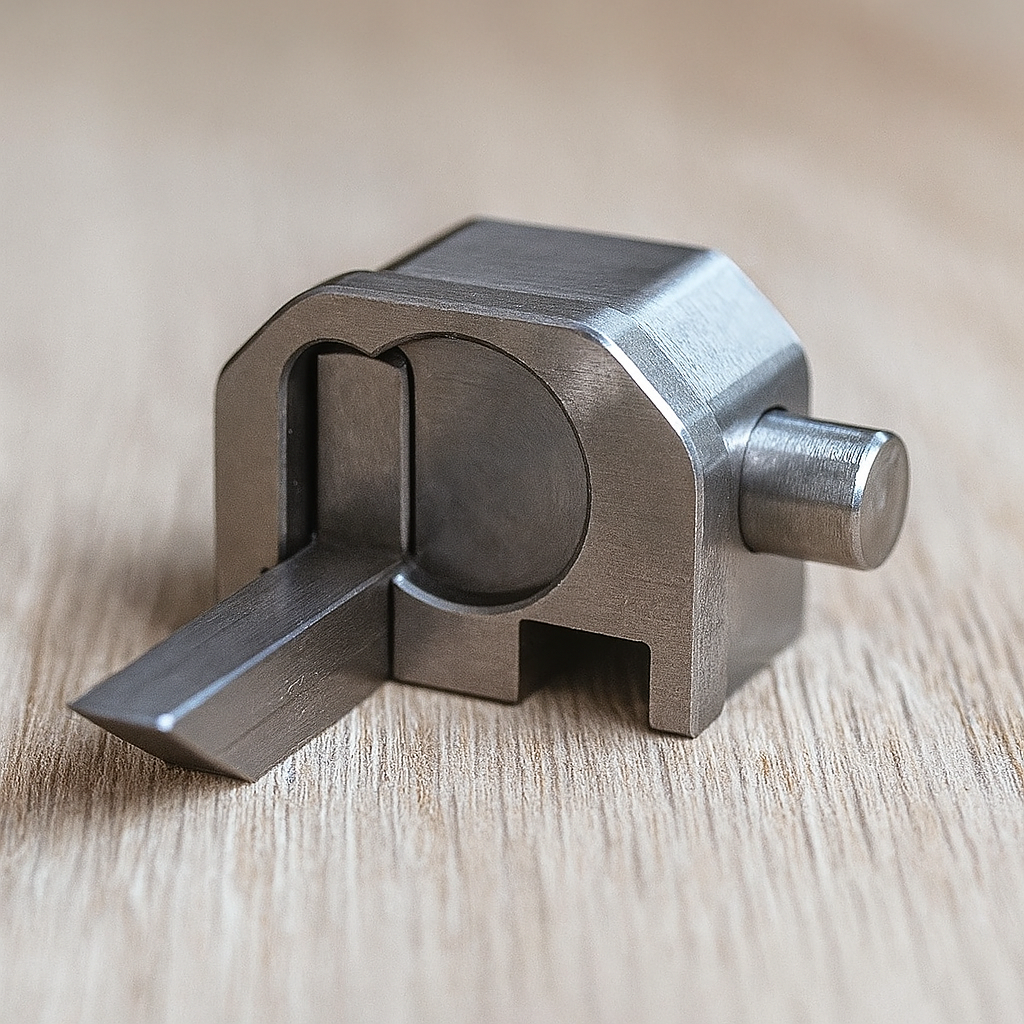
You’ve seen the videos and heard the myths, but the reality of a Glock switch is a small, machined component that replaces your pistol’s backplate. When installed, it converts your semi-automatic Glock into a fully automatic firearm by manipulating the sear mechanism. It’s not magic—it’s mechanics. At GlockAutoSwitches, we field daily questions from enthusiasts who want the facts, not the folklore. This guide cuts through the noise.
How a Glock Switch Actually Works
Forget the Hollywood depictions. A Glock switch, or auto sear, functions by interrupting the normal reset of the trigger bar. In a standard Glock, the connector angles the trigger bar downward after each shot, disengaging from the striker. The switch holds the trigger bar in the upward, “fired” position. When the slide cycles, it automatically re-engages the striker with the sear, causing the pistol to fire again the instant the slide returns to battery. This creates an open-bolt-like firing cycle. The rate of fire is dictated by your slide velocity; on a Glock 17, expect around 1,200 rounds per minute. It’s a simple mechanical override, which is why quality machining from a source like GlockAutoSwitches is non-negotiable for reliable function.
Legal Status: The 1021 Rule is Not a Myth
This is the most critical section. Under the National Firearms Act (NFA), a machine gun is defined as any weapon which shoots more than one shot, without manual reloading, by a single function of the trigger. A Glock switch alone meets this definition as a “machinegun” under federal law. Possession or installation without the proper tax stamp, registration, and approval from the ATF is a felony. The “Honey Badger” letter and the ATF’s 2021 ruling on forced reset triggers (FRTs) have only reinforced this. There is no “gray area” for new manufacture or possession. Any legitimate discussion about switches is strictly in the context of pre-1986 registered dealer samples or post-1986 law enforcement/military use. We provide this information for educational purposes regarding existing registered items only.
Identifying Quality: CNC vs. MIM
Not all switches are created equal. For a part undergoing such intense stress, material and manufacturing matter. Avoid cheap, sintered metal or Metal Injection Molded (MIM) parts—they will crack or deform. A proper switch must be CNC machined from pre-hardened tool steel, like 4140 or 4340 alloy. Look for clean machining lines, precise pin holes, and a hardened finish. The engagement surfaces must be perfectly square. A poorly made switch can cause runaway full-auto fire, hammer follow, or catastrophic failure. The components we reference at GlockAutoSwitches are built to these exacting specs, because anything less is a range hazard.
Installation & Function Check: A Safety Mandate
Installation is straightforward but demands attention. With the slide removed and the pistol cleared, you depress the striker safety plunger and slide the factory backplate off. The switch replaces it, with its lever sitting against the trigger bar. The critical step is the function check. With the slide ON and an EMPTY magazine inserted, pull and hold the trigger. Rack the slide. If the switch is installed correctly, the striker will release as the slide goes into battery, simulating full-auto fire. This test must be done repeatedly before ever introducing live ammunition. Failure to perform this check can result in an unintentional discharge.
Platform Compatibility & Caliber Considerations
Switch compatibility is model-specific due to differences in frame width and trigger bar geometry. A switch for a full-size double-stack frame (Glock 17, 22, 31) will not fit a slimline (Glock 43) or a large-frame Gen4/Gen5 (Glock 20, 21) without modification. Caliber directly impacts performance. High-pressure cartridges like .357 SIG or 10mm generate significantly more slide velocity and cyclic rate than 9mm, increasing wear on the switch and frame. Using a switch on a pistol not designed for sustained automatic fire will accelerate wear on the locking block, slide rails, and connector. It is a specialized modification for specific, registered host firearms.
What is a switch for Glock?
A Glock switch is a small, aftermarket metal component that replaces the factory backplate on a Glock pistol. When installed, it mechanically alters the firearm’s firing mechanism to enable fully automatic fire with a single pull and hold of the trigger. It is legally classified as a machinegun under federal law.
Are Glock switches legal to own?
No. A Glock switch is considered a machinegun under the National Firearms Act (NFA). Ownership requires an approved ATF Form 4, a $200 tax stamp, and registration of the device. For civilians, only switches registered before May 19, 1986 are transferable, and they are exceedingly rare and expensive.
What Glock models are compatible with switches?
Switches are designed for specific frame sizes. The most common compatible models are the full-size and compact double-stack 9mm/.40/.357 SIG frames, like the Glock 17, 19, 22, and 23. They are not compatible with single-stack, slimline, or .45 ACP/10mm large frame models without significant, unreliable modification.
How does a switch affect a Glock’s reliability?
It significantly increases stress on the firearm. The extreme cyclic rate accelerates wear on the slide, recoil spring assembly, locking block, and frame. Reliability in full-auto is highly dependent on ammunition quality, magazine spring tension, and the condition of all components. It is not a modification for a duty or defensive pistol.
Browse our glock switches collection
Last updated: April 08, 2026