Glock Switch vs. Glock 18: The Real Story
You’re looking at a Glock 19 with a switch and a factory Glock 18, both on full-auto. To the untrained eye, the result is the same: a spent magazine in under two seconds. But the path to that result, the mechanics involved, and the legal reality are worlds apart. Understanding the difference isn’t academic; it’s essential for anyone serious about this niche.
Mechanical Origins: Aftermarket Part vs. Factory Firearm
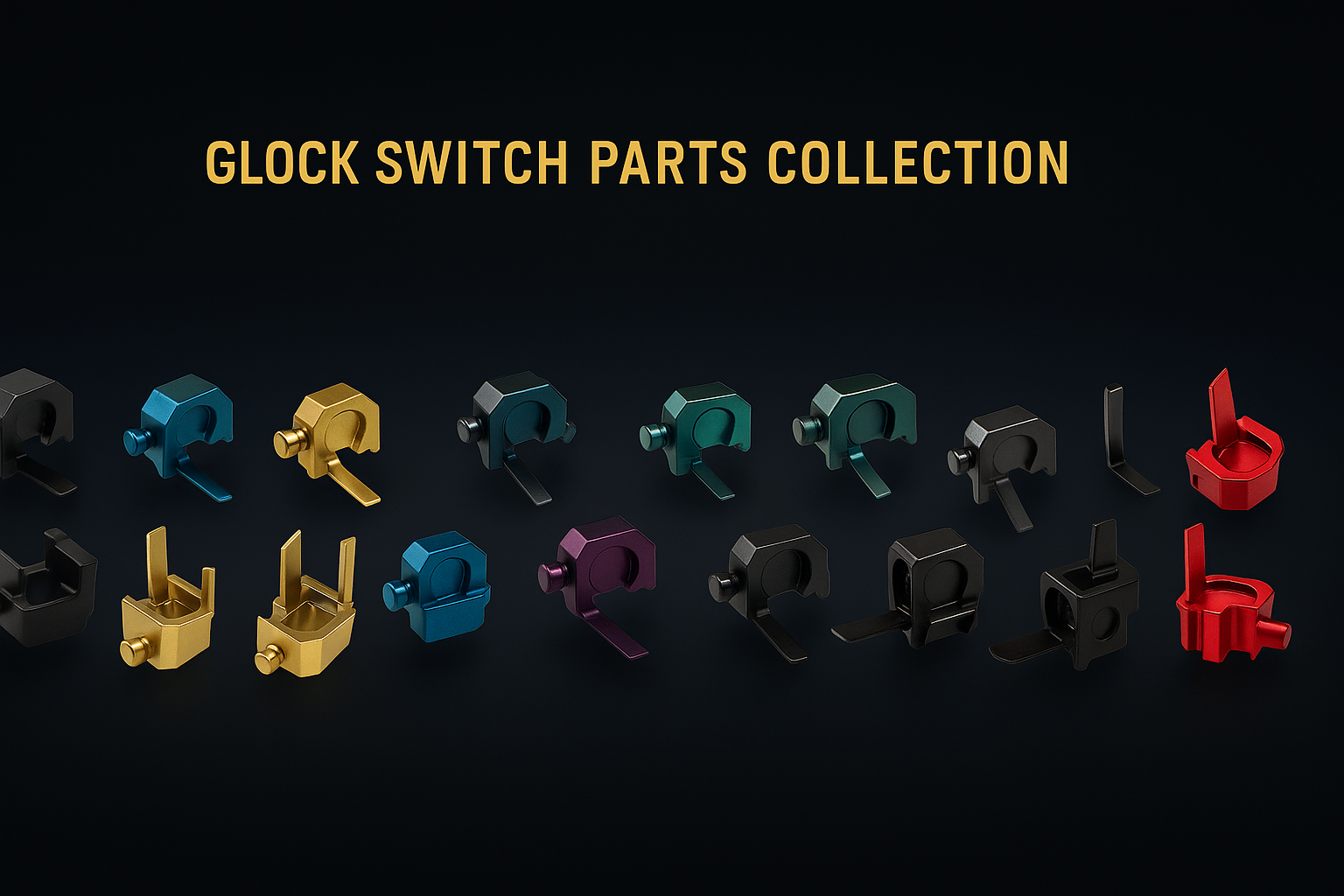
The core distinction is foundational. A Glock switch, like the common “Giggle Switch” or “Auto Sear,” is an aftermarket conversion device. It’s a small, typically metal component that modifies a standard semi-automatic Glock pistol (like a Glock 17, 19, or 26) to fire in a fully automatic mode. It interacts with the pistol’s trigger mechanism and slide to hold the firing pin back, allowing it to cycle with each shot. The Glock 18, however, is a complete, purpose-built machine pistol designed and manufactured by Glock GmbH. Its full-auto capability is integral, originating from a factory-installed selector lever on the slide and a modified internal fire control group. One is an add-on, the other is the original blueprint.

See compatible switches for Gen 3-5 models
Performance & Practicality in Use
On the range, the differences become tangible. A switched Glock, especially on a compact frame like a G19, becomes notoriously difficult to control after the first few rounds. Muzzle climb is severe, and practical accuracy beyond point-blank range is negligible. It’s a fun, but largely impractical, exercise. The factory Glock 18 was designed with controllability in mind. It features a slightly longer, ported barrel and is almost always used with an extended 33-round magazine or a proprietary high-capacity magazine. While still a handful, its weight distribution and design make it marginally more manageable. Neither are precision instruments; they are bullet hoses. But the G18 is the more refined hose.
The Legal Chasm: NFA Regulations
This is the non-negotiable dividing line. In the United States, the Glock 18 is classified as a Title II machine gun under the National Firearms Act (NFA). Transferable, pre-1986 dealer samples exist but are exceedingly rare and command prices of $25,000 or more. They are not available to the general public. A Glock switch, by itself, is classified as a “machinegun” under federal law (ATF ruling 2018-3). Possessing one, or a Glock modified with one, without the proper NFA paperwork is a felony punishable by up to 10 years in prison. This isn’t a gray area. At Glockautoswitches, we stress that our products are for educational display and compliant use only, within the full bounds of federal and state law.

View display and technical models
Availability and Acquisition Reality
For the civilian enthusiast, the Glock 18 is essentially a museum piece or a law enforcement/military curio. You will not walk into a store and buy one. Your only legal path is through the tightly regulated NFA process for a transferable machine gun, requiring extensive background checks, a $200 tax stamp, and a five-figure investment. The aftermarket switch exists in a different realm. While the functional components are federally restricted, non-functional display models, diagrams, and technical replicas are available for collectors and those interested in the mechanical engineering. These are the items you’ll find at reputable sources like Glockautoswitches, designed for analysis, not assembly.
Final Verdict: Collector’s Curiosity vs. Mechanical Modification
Choosing between them isn’t a choice at all—it’s a matter of context. The Glock 18 is the rare, legally-restricted original. The Glock switch represents the widespread mechanical principle that enables the conversion of a ubiquitous platform. For 99.9% of people, the “Glock 18 experience” will only ever be through handling a switched semi-auto, which underscores the importance of understanding the device itself. If your interest is in the history and official design, study the G18. If your interest is in the mechanical function that enables selective fire on a Glock pattern pistol, then studying the design and operation of a switch is the relevant path.
FAQ
What is a switch for a Glock?
A Glock switch is an aftermarket conversion device, often called an auto sear or “Giggle Switch.” When installed in a semi-automatic Glock pistol, it modifies the fire control group to allow for fully automatic fire. By itself, it is federally regulated as a machinegun under the NFA.
Is a Glock 18 legal to own?
For private citizens in the US, it is virtually impossible. The Glock 18 is a machine gun, and only transferable units registered before May 19, 1986, can be legally owned under the NFA. These are extremely rare and cost tens of thousands of dollars, requiring an extensive federal application process.
Can you buy a Glock switch legally?
You cannot legally purchase a functional Glock switch without the proper Federal Firearms License (FFL) and NFA manufacturer or dealer credentials. However, non-functional display models, diagrams, and inert training aids are legally available for educational and collector purposes from specialized retailers.
Which Glock models can a switch work on?
Common aftermarket switch designs are typically engineered for the Gen 3, Gen 4, and Gen 5 models of the full-size and compact frames, like the Glock 17, 19, 22, and 23. The mechanism relies on the specific geometry of the Glock trigger housing and slide. Always verify compatibility for your specific model.
Browse our glock switches collection
Last updated: April 08, 2026