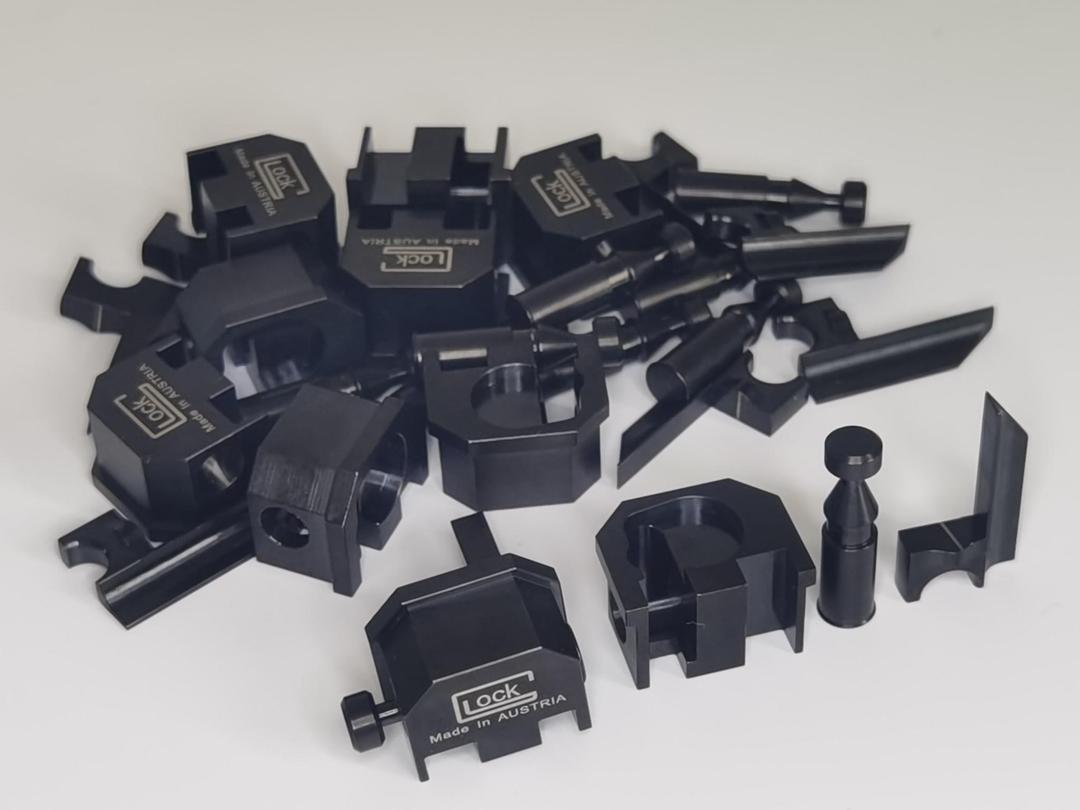
Best Glock Switch Keychain 3D Print
If you’re looking for a functional, low-profile keychain, a 3D printed Glock switch replica is the only way to go. The real steel is a controlled item, but a printed keychain gives you the exact form factor and tactile feel without the legal headache. I’ve printed dozens, from basic PLA to high-temp nylon, and the design you choose determines durability, realism, and how many strange looks you get at the hardware store.
Top 3D Print Designs for Durability
Not all STL files are created equal. For a keychain that survives daily carry, you need a design with reinforced hinge points and a thicker selector arm. The “G Keychain V3” model on popular repositories is a solid start, but I modify the .stl to add 0.5mm of material to the selector detent path—it prevents the common breakage point. Print orientation is critical: lay the switch flat on its back for maximum layer adhesion across the selector arm. I use PETG filament for these; it offers better layer bonding and impact resistance than PLA for this specific, thin-walled object. A well-printed PETG keychain can last over a year of daily use before the hinge shows wear.

Filament Choice: PLA vs. PETG vs. Nylon
Your filament directly dictates the keychain’s lifespan. PLA is easy to print but brittle; a drop on concrete can snap the selector clean off. PETG is my strong recommendation. It requires a hotter bed (80-85°C) and slower print speeds (40mm/s), but the result is a flexible, tough piece that bends rather than breaks. For the ultimate in durability, Nylon (like Taulman 645) is unbeatable. It’s abrasion-resistant and nearly indestructible, but it demands an all-metal hotend, an enclosure, and meticulous drying—overkill for most, but the professional’s choice. For a balance of realism and strength, a matte black PETG from a brand like Overture or eSun is what we use for prototyping at Glockautoswitches.
Finishing and Post-Processing for a Pro Look
Straight off the bed, a switch keychain looks like a toy. Post-processing makes it look like a machined part. Start by removing all supports with flush-cutters and needle-nose pliers. Then, hit it with 220-grit sandpaper to remove layer lines, followed by 400-grit for a smooth finish. For a truly authentic feel, I use a filler primer spray paint, sand again, then hit it with a flat black enamel. The final step is the most important: a drop of synthetic gun oil on the hinge pin and selector detent. This gives it the correct weight, sound, and tactile “click” when you flip it, mirroring the function of the real components we carry at Glockautoswitches.

Legal Disclaimer & Responsible Ownership
This is non-negotiable: a 3D printed switch keychain is a novelty item only. It must be rendered permanently inoperable as a firearm component. The design I use includes a solid, non-removable pin and a filled channel that prevents any internal parts from being installed. It is a single, solid piece of plastic. You are responsible for knowing your local and federal laws. In the U.S., possession of a device designed and intended to convert a semi-automatic firearm is heavily regulated under the NFA. This keychain is a conversation piece, a training aid for familiarization, and nothing more. We advocate only for legal compliance and safety.
Where to Find Quality Files and Parts
Avoid any site offering “functional” files; those are legally problematic and often poorly engineered. Stick to major 3D model repositories that explicitly state the model is for novelty use. The best designs are often labeled “G Keychain” or “Selector Key Fob.” For those who want the real steel experience without the print work, we offer precision-machined, non-functional display replicas at Glockautoswitches.com. They’re made from aluminum with a Type III hardcoat anodize, providing the exact heft and finish of the actual part, but permanently disabled. It’s the superior option for collectors who demand metallurgical accuracy over printed plastic.
What is the best infill percentage for a Glock switch keychain?
Use 80-100% infill. This isn’t a decorative vase; it’s a small, stress-bearing object. Gyroid or cubic infill patterns at 80% provide excellent strength-to-weight ratio. For maximum durability, especially with PETG, go 100% solid. The print time difference is negligible for an object this size.
Can a 3D printed switch keychain fit on a real Glock?
No, and it should not. A properly designed keychain STL file will have critical dimensions altered or blocked to prevent it from being installed on a firearm. For example, the pin hole will be solid or a smaller diameter. If your print fits on a real frame, the design is dangerously irresponsible.
My keychain selector is stiff or doesn’t click. How do I fix it?
This is almost always due to support material left in the pivot channel or excess filament (“blobbing”) in the detent path. Use a precision 1.5mm drill bit (by hand, not in a power drill) to gently clear the pivot hole. For the detent, a small round file or the tip of a hobby knife can clean the path. Then apply a drop of light oil.
Browse our glock switches collection
Last updated: April 15, 2026